


Sports drinks vs water for running
- Atalen

- Jun 18
- 7 min read

Running nutrition gets messy quite quickly once duration, heat and intensity increase. A short easy run in cool weather does not need the same hydration strategy as a 6 hour mountain ultra in July. Yet many runners still either overcomplicate hydration or massively underestimate it.
The debate around sports drinks vs water for running usually comes down to one question: when is water enough, and when do you actually need carbohydrates and electrolytes?
For trail runners, the answer depends on pace, temperature, sweat rate, aid station access, gut tolerance and how much you are already eating during the run. There is no universal formula that works for everyone, but there are some very consistent patterns in the research and in real world racing.
Quick answers
Is water enough for short runs?
Usually yes. For runs under about 60 minutes in moderate conditions, plain water is often sufficient unless you start already dehydrated.
When do sports drinks become useful for running endurance?
Sports drinks become more useful once runs exceed 90 minutes, especially in heat or when carbohydrate intake drops below roughly 30 to 60g per hour.
How much should trail runners drink per hour?
Most runners fall somewhere between 400 and 800ml per hour, but sweat rates vary massively. Hot weather and climbing can push requirements much higher.
Can sports drinks reduce cramping?
Sometimes, but not always. Sodium losses and dehydration can contribute to cramping, although fatigue and pacing also play a major role.
Are sports drinks better than water for trail running nutrition?
Not automatically. Some runners tolerate liquid carbohydrates very well, while others get bloated and prefer separate water plus solid fuel.
Should you combine sports drinks and gels?
You can, but you need to watch total carbohydrate concentration. Too much sugar in too little fluid is one of the fastest ways to upset your stomach.
Table of contents
What changes your hydration needs during running
Hydration needs are driven by more than just distance.
A cool 2 hour forest run at conversational pace can require less fluid than a hard uphill race lasting 75 minutes in direct sun. Sweat rate changes with temperature, humidity, intensity, altitude, clothing, body size and acclimation.
Most runners lose somewhere between 0.4 and 1.5 litres of sweat per hour. Some heavy sweaters go beyond 2 litres per hour in hot conditions. Sodium losses also vary enormously, from roughly 200mg to over 1800mg per litre of sweat depending on the athlete.
That variability matters because it changes whether plain water is enough or whether electrolyte replacement becomes important.
If you lose a lot of sodium and replace everything with plain water over many hours, you increase the risk of dilution and hyponatremia. On the other hand, drinking strong sports drink continuously without enough fluid can overload the gut and leave you nauseous.
You are trying to find a balance that keeps hydration, carbohydrate intake and stomach comfort manageable at the same time.
When water is usually enough for running

For most easy or moderate runs under about 60 minutes, water is completely fine.
Even during runs lasting 60 to 90 minutes, many runners still perform perfectly well with just water if conditions are cool and glycogen stores were already full before starting.
This is where marketing often creates confusion. Many recreational runners end up consuming sports drinks during short runs where they simply are not physiologically necessary.
Water generally works well when:
The run is relatively short.
The intensity stays moderate.
Temperatures are mild.
You are not sweating excessively.
You are eating normally before and after the session.
For many trail runners, carrying only water on shorter technical runs is also simpler logistically. Less sticky residue, less flavour fatigue and easier flask cleaning afterwards.
When sports drinks become useful for running endurance
Sports drinks start becoming genuinely useful once hydration and energy intake overlap.
That usually happens during:
Long runs over 90 minutes.
Trail races with sustained climbing.
Hot conditions.
High intensity efforts.
Sessions where eating solid fuel becomes difficult.
Most sports drinks provide both fluid and carbohydrates, often around 20 to 40g of carbs per 500ml bottle, alongside sodium. This can reduce the need to carry additional gels or food. For some runners, liquid calories are easier to tolerate late in races when chewing becomes unappealing.
Research consistently supports carbohydrate intake during prolonged endurance exercise. Current sports nutrition guidelines commonly suggest around:
30 to 60g carbs per hour for runs lasting 1.5 to 2.5 hours.
60 to 90g per hour for longer endurance events if gut trained properly.
Sports drinks can contribute meaningfully toward those targets.
The problem is that many runners accidentally create overly concentrated mixes. Two gels plus concentrated sports drink plus minimal water intake is a common recipe for stomach issues during ultras.
How much sodium and carbohydrates do runners actually need
This is where things become individual very quickly.
A reasonable starting point for many trail runners looks something like this:
400 to 800ml fluid per hour.
300 to 700mg sodium per hour.
30 to 90g carbohydrates per hour depending on duration and intensity.
But these are starting ranges, not rigid rules.
If you finish every long run with white salt marks on your clothing, recurring headaches or severe cramping, you may need more sodium. If your stomach feels sloshy or bloated, you may actually be overdrinking. If energy crashes happen despite regular gels, you may not be absorbing enough carbohydrate because fluid intake is too low.
One common mistake is separating hydration and fuelling entirely in your mind. They interact constantly. Carbohydrate absorption depends heavily on fluid availability.
Common mistakes
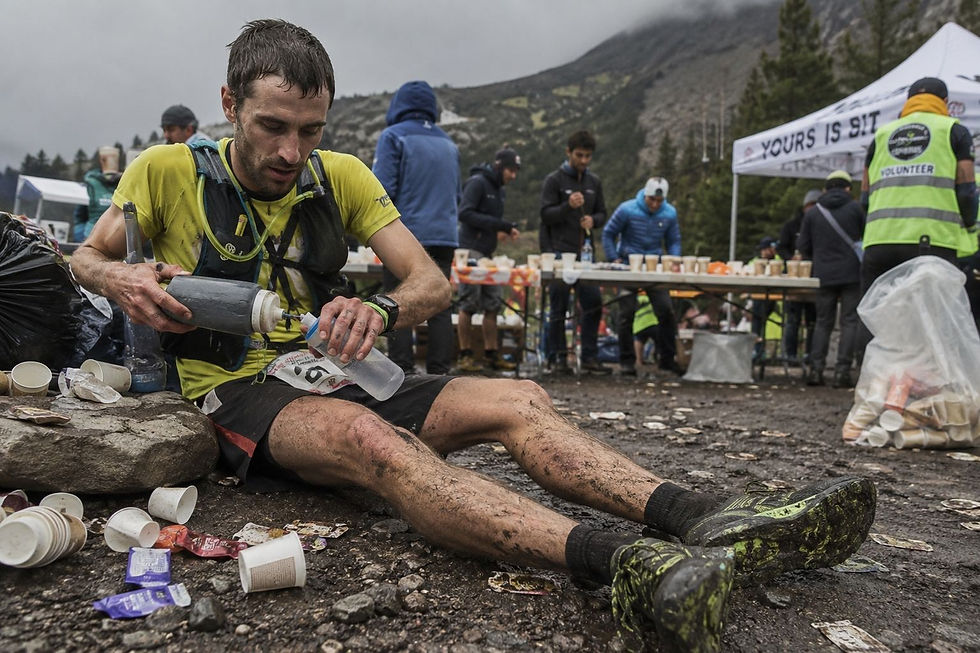
A few patterns appear repeatedly among trail runners.
Drinking only when thirsty during hot races can work for some runners, but others fall behind hydration far too late before realising it.
Overcorrecting is also common. Some runners force excessive fluid intake because they are scared of dehydration, then end up with nausea or dilution problems.
Another issue is stacking too many carbohydrate sources together without adjusting concentration.
For example:
500ml strong sports drink.
2 gels per hour.
Minimal plain water.
That can push carbohydrate concentration well beyond what many stomachs tolerate, especially during climbing or heat exposure.
Flavour fatigue matters too. Sweet drinks that feel fine at hour 2 can become unbearable at hour 8. Many experienced ultra runners eventually move toward mixed strategies with both plain water and lighter electrolyte drinks.
Sports drinks & water in hot weather
Heat changes almost everything: sweat rates increase, sodium losses rise & gut tolerance often decreases. Fluid requirements can double compared to winter conditions.
During hot trail races, sports drinks often become more valuable because maintaining both hydration and sodium intake gets harder through food alone. But concentration matters even more in heat.
Very sugary drinks can slow gastric emptying and worsen stomach discomfort. Many runners tolerate lighter carbohydrate mixes better during hot races while relying more heavily on gels, chews or aid station foods separately.
Aid station spacing also matters in trail races. If refill opportunities are 90 minutes apart in exposed terrain, carrying only plain water can leave you short on sodium and energy unless you carry separate fuel carefully.
This is where testing becomes essential rather than theoretical.
A practical example of hydration planning for a long trail run
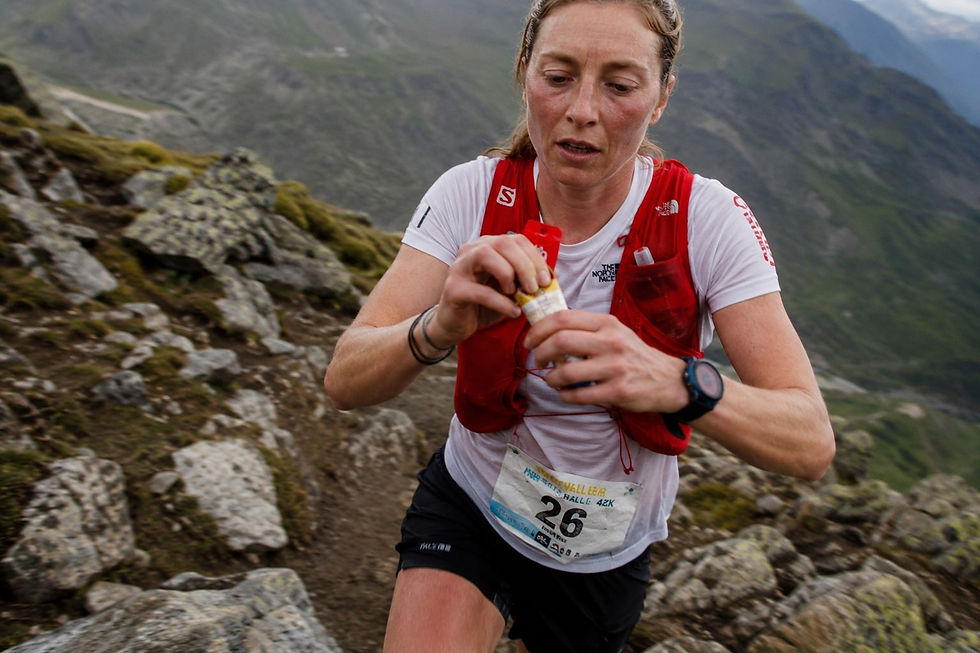
Imagine a 4 hour trail run in warm weather with moderate climbing.
A runner estimates sweat loss around 700ml per hour based on previous training.
They decide on:
600ml fluid per hour.
500mg sodium per hour.
60g carbohydrates per hour.
Their setup might look like:
1 flask with electrolyte drink containing 30g carbs and 500mg sodium.
1 flask with plain water.
1 gel every 30 minutes adding another 30g carbs per hour.
This approach spreads carbohydrate intake between drink and gels while keeping overall concentration manageable. If stomach discomfort starts appearing after 2 hours, they might dilute the drink slightly or increase plain water intake.
This is rarely perfect on the first attempt. Most good race nutrition strategies come from repeated small adjustments over months.
How to test your hydration strategy before race day
Long training runs are where hydration plans should fail, not race day.
Testing matters because tolerance changes under fatigue, heat, climbing and intensity.
Things worth testing include:
How much fluid you comfortably absorb per hour.
Whether concentrated drinks upset your stomach.
How your energy levels respond to different carb intake levels.
Which flavours become intolerable after several hours.
How often you actually remember to drink while running technical terrain.
Many runners discover that the limiting factor is not science knowledge but practical execution. Forgetting to drink, missing sodium intake or avoiding fuel because of nausea is extremely common during long races.
How to apply this with Atalen
Atalen helps make hydration planning more concrete instead of relying on vague estimates or memory.
You can compare sports drinks, electrolyte tablets, gels and real foods by carbohydrate content, sodium levels, serving size, weight and practical use during effort.
You can build a hydration and fuelling plan hour by hour before a race, then reuse that template for future runs with similar conditions.
After each run, you can log what you actually drank and ate, alongside gut comfort, taste fatigue, energy stability and execution quality. That feedback loop matters because hydration strategies are highly individual. Over time, patterns become easier to spot. Some runners tolerate liquid carbohydrates extremely well. Others consistently perform better separating plain water from fuelling.
Atalen also helps runners compare products using transparent nutrition data and real runner digestion feedback rather than marketing claims alone.
Conclusion
The sports drinks vs water for running debate usually becomes much clearer once duration and conditions are considered properly.
Water is often perfectly adequate for shorter or easier runs.
Sports drinks become increasingly useful as runs get longer, hotter or harder, especially when hydration and carbohydrate needs start overlapping.
The best strategy is rarely the most aggressive one. It is the one you can consistently tolerate and execute under fatigue.
That generally means testing gradually, tracking what actually works for your body and staying flexible enough to adapt when weather, terrain or race intensity changes.
Sources
American College of Sports Medicine Position Stand: https://pubmed.ncbi.nlm.nih.gov/17277604/
Jeukendrup Sports Nutrition Review: https://pubmed.ncbi.nlm.nih.gov/24791903/
International Society of Sports Nutrition Hydration Position Stand: https://jissn.biomedcentral.com/articles/10.1186/s12970-019-0289-4
British Journal of Sports Medicine Consensus on Nutrition for Endurance Sport: https://bjsm.bmj.com/content/52/7/439
Precision Hydration Sweat Testing Resources: https://www.precisionhydration.com/
Australian Institute of Sport Sports Nutrition Guidelines: https://www.ais.gov.au/nutrition


Comments